If you’ve read about West Papua in the international press, you’ve likely encountered the name DeMMAK. Depending on the source, it’s been described as an “extremist organization,” a “violent separatist movement,” or even a “semi-military task force” fighting Indonesian rule.
But here’s the thing: almost none of these characterizations match what the organization actually is, what it actually does, or what its members actually say about it.
A new comprehensive study, Beyond Misconceptions: Understanding DeMMAK’s Role in West Papua’s Highlands, draws on a decade of collaborative research to challenge these security-centric narratives. The authors — Papuan scholars, a European legal anthropologist, and an Australian human geographer — argue that DeMMAK is perhaps the most significant and misunderstood indigenous governance experiment in contemporary Melanesia.
Here’s what they found.
What Is DeMMAK, Really?
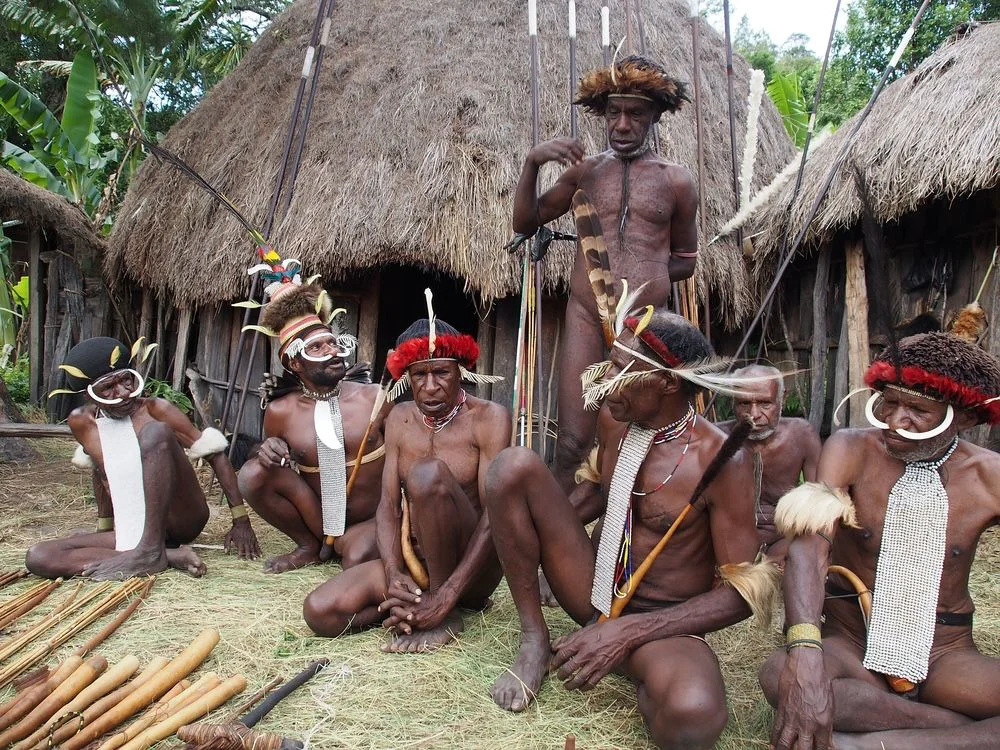
DeMMAK stands for the Dewan Musyawarah Masyarakat Adat Koteka — the Koteka Tribal Assembly. Founded in January 2000, in the political opening following the fall of Indonesia’s Suharto regime, it emerged from discussions among elders from the highland tribes: Lani, Walak, Nggem, Mee, Amungme, Kamoro, Yali, Damal, and Moni.
Its stated mission is straightforward:
“To peacefully, democratically and legally work towards the recognition and protection of customary laws, values and beliefs of the Koteka peoples.”
This is not the language of a militant group. It’s the language of cultural preservation and legal empowerment.
The Confederation That Works Like the UN
DeMMAK’s organizational structure is deliberately decentralized. It operates as a confederation of clans and tribes that voluntarily join or leave as they wish — a model the organization itself compares to the United Nations, the European Union, or the Swiss canton system.
Elders are the top authority. They represent their communities, speak on their behalf, and participate in consensus-based decision-making (consensus based on delibarations). Leadership positions — including Field Leader Benny Wenda and International Chair Sem Karoba — derive their authority from elder consent, not military command.
This matters because external observers keep trying to fit DeMMAK into familiar boxes: state, non-state, political party, armed movement. But it fits none of them. It’s a genuinely novel institutional form rooted in Melanesian governance traditions.
Reclaiming the Koteka Identity
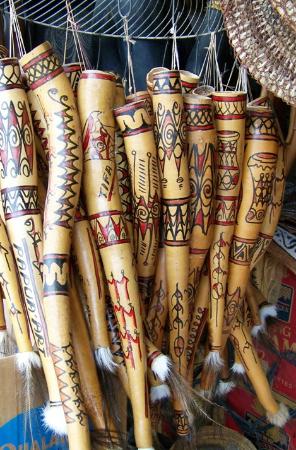
The name itself is significant. “Koteka” refers to the penis gourd traditionally worn by men in the highlands. During the early 1970s, the Indonesian government launched “Operasi Koteka” — a campaign to confiscate and burn these gourds as part of an assimilation effort to “civilize” highland Papuans.
By reclaiming the term, DeMMAK transformed an object of stigma into a symbol of pride and self-definition. This is a deliberate act of what the authors call “indigenous epistemological authority” — the right to define one’s own identity on one’s own terms.
What DeMMAK Actually Does
The study presents six detailed case studies that document the organization’s dual mission: restoring customary systems while building modern institutions. Here’s what that looks like in practice:
1. Restoring Customary Storylines
In Koteka cosmology, stories aren’t folklore — they’re law. They define clan boundaries, regulate resource use, establish authority, and resolve disputes. DeMMAK works with elders to document and restore these stories, reactivating them as living governance infrastructure.
2. Codifying Customary Laws
Oral law is vulnerable. Elders die. Knowledge gets lost. State courts can’t read it. DeMMAK’s codification program writes customary law down in forms that can be cited in legal proceedings, used in land negotiations, and preserved for future generations — while carefully avoiding the risk of freezing flexible traditions into rigid rules.
3. Establishing Clan-Based Businesses
Perhaps the most ambitious program: DeMMAK helps clans establish modern customary organizations and business entities. This gives communities the institutional tools to hold bank accounts, enter contracts, manage government funds, and negotiate with corporations from a position of institutional parity.
4. Legalizing Heritage Protection
Sacred sites, customary forests, spiritual landscapes — under Indonesian law, these are vulnerable to being classified as “state land” by default. DeMMAK’s restitution program proactively registers and protects indigenous heritage through the state’s own legal mechanisms.
5. Community-Based Tourism
Among the Kamoro tribe, DeMMAK’s principles have enabled community-controlled tourism — dances, festivals, carvings, traditional boats — that generates income while keeping cultural practices alive and under community control.
The Demographic Reality
Here’s a number that should change how you think about DeMMAK: its constituency is estimated at 750,000 to 850,000 people across approximately 150,000 square kilometers — an area larger than England.
In the core highland regencies, indigenous Papuans constitute 95 to 99 percent of the population. These communities aren’t marginal. They’re the demographic reality.
By comparison, DeMMAK’s constituency rivals that of Bhutan (780,000), the Solomon Islands (720,000), or Fiji (900,000). This is not a fringe group or a small militant cell. It’s a substantial indigenous institution.
The Problem of Misrecognition
So why does the security narrative persist?
The study identifies several factors. Restricted access to the highlands means journalists and monitors can’t independently verify what’s happening. The Indonesian state has a long history of framing Papuan political expression as a security threat. The international community has been reluctant to challenge these narratives due to strategic and economic interests in Indonesia.
And the arrest and conviction of Benny Wenda in 2002 on charges related to attacks on security installations cast a long shadow. Wenda escaped custody, gained political asylum in the UK, and has continued to advocate for Papuan independence.
But the authors draw an important distinction: Wenda is a DeMMAK leader, but DeMMAK is not Wenda. The organization’s cultural and developmental programs continued after his arrest and exile. His individual legal case does not define the institution’s primary mission.
Circular Theology: A Philosophy of Indigenous Modernity
One of the most fascinating aspects of the book is its analysis of what DeMMAK calls “Circular Theology.” The core idea:
“Life is beginning-less as well as endless; encircles through One Door that recycles birth to death as a continuous loop.”
This isn’t just abstract cosmology. It’s a development philosophy. Within a circular framework, modernization isn’t a departure from tradition — it’s another phase in an ongoing cycle of renewal. Cultural preservation and economic development aren’t alternatives; they’re complementary.
This philosophy enables a distinctive posture: engaging with modernity while asserting indigenous identity, adopting new institutional forms while maintaining cultural continuity.
Why This Matters
The authors argue that misrecognizing DeMMAK has real consequences:
- For policy: International development agencies are structurally inhibited from engaging with a legitimate development partner.
- For law: The organization’s legal strategies for land registration and customary law recognition are undermined.
- For human security: Indigenous advocates face heightened risks when their organization is framed as a militant threat.
- For scholarship: An entire framework of Melanesian governance anthropology has been underutilized in understanding highland Papuan institutions.
The Bottom Line
DeMMAK is not what you’ve been told. It is a legitimate indigenous institution, representing three-quarters of a million people, pursuing a culturally grounded modernization agenda through legal and institutional channels.
Is it caught up in the political conflicts that surround West Papua? Absolutely. Does that mean it’s primarily a security threat? The evidence suggests otherwise.
Understanding DeMMAK on its own terms is not an academic luxury. It’s a prerequisite for any meaningful engagement with the future of Papua’s highland communities — and, beyond Papua, for any engagement with indigenous peoples who refuse the choice between preserving their cultures and participating in modernity.
The Koteka peoples, through their confederation, are attempting something remarkable: to walk in two worlds without losing their feet. Whether they succeed or fail, the attempt itself deserves to be seen clearly.
This article is based on Beyond Misconceptions: Understanding DeMMAK’s Role in West Papua’s Highlands, published in the Routledge Contemporary Anthropology Series (2025).
Leave a Reply