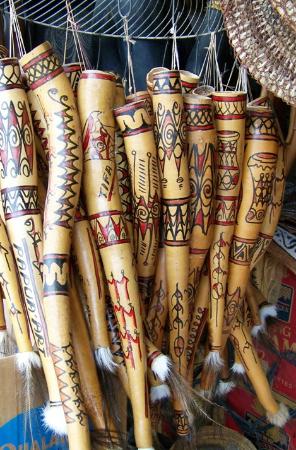

The Koteka Tribal Assembly, or Dewan Musyawarah Masyarakat Adat Koteka (DeMMaK), is a cultural and political organization established in January 2000 by highland tribal elders in West Papua. It was founded to protect customary laws, secure indigenous rights, and advocate for full independence from Indonesia.
Foundation and Early Goals
- Establishment: Formed in January 2000 following assemblies of highland elders.
- Core Mission: DeMMaK works to protect the traditional values, beliefs, and customary laws of the Koteka-wearing peoples.
- Leadership: Sam Karoba founded the organization as its international chair, and Benny Wenda served as its field leader and Secretary-General.
- Tribal Makeup: Represents central and southern highland groups, identifying broadly across traditional classifications. [1, 2]
Political Stance and the Papuan Spring
- Papuan Spring: Active during the regional political opening around 2000–2001.
- Rejection of Autonomy: DeMMaK rejected Indonesian special autonomy offers, holding firm to a demand for full political independence.
- Suppression: Following shifts in Indonesian policy by 2001, leaders faced crackdowns, arrests, and exile due to their assembly activities. More details and structural updates can be found directly on the Koteka Tribal Assembly platform.
The Koteka Tribal Assembly (DeMMaK) represents the highland, koteka-wearing indigenous peoples of West Papua. Culturally, the assembly classifies its core membership into four major tribes: [1, 2]
- Lani
- Mee
- Yali
- Loma (Damal)
- Amungme
- Kamoro
External observers and researchers broaden this list into seven primary groups along with several closely associated sub-tribes:
- Primary Tribes: Lani, Mee, Yali, Amungme, Kamoro, Damal, and Moni.
- Sub-Tribes & Clans: Hubula (Dani), Walak, Hupla, Nggem, Kimyal, Momuna, and Ngalik.
The Koteka Tribal Assembly (DeMMaK) structures customary law (adat) as a decentralized tribal confederation. Rather than enforcing a top-down legal code, the assembly acts as an umbrella body that unifies and codifies the distinct traditional legal frameworks of the independent West Papua highland tribes.
Customary law within the assembly operates through several foundational structural components:
- Autonomous Confederation: Tribes and their respective elders join or leave the assembly voluntarily, retaining full independent authority over their local clan territories and internal laws.
- The “Big Man” Leadership System: Governance relies heavily on the authority of village elders and localized tribal leaders whose legal legitimacy is derived from community achievements, collective respect, and cultural heritage, rather than formal state-appointed titles. [1, 2]
- The Musyawarah Adat: Legal disputes, land ownership conflicts, and political decisions are handled through this traditional, democratic council of elders. The process heavily prioritizes communal negotiation, consensus, and social reconciliation over strictly punitive retributive actions. [1, 2]
- Communal Land Stewardship: Property rights within the adat system are fundamentally organized around communal, ancestral clan ownership rather than individual modern real estate titles, which frequently places the assembly’s structure in direct legal opposition to Indonesian state-backed corporate resource mapping.
Communal Land Disputes & Industrial Projects
Adat law addresses industrial threats through a unified framework of ancestral ownership:
- Communal Veto Power: Individual land sales are forbidden; entire clans must reach a consensus (musyawarah) to approve or reject industrial resource extraction. [1, 2]
- The Hak Ulayat Doctrine: The assembly enforces traditional territory rights, declaring state-issued corporate mining and logging permits illegal under customary law.
- Sacred Mapping: Elders use oral histories, ancestral burial sites, and traditional hunting boundaries to legally map out territories and block state encroachment. [1]
The “Big Man” (Kain or Ap) Leadership System
Leadership within the assembly relies on earned social status rather than inherited power or state appointments: [1]
- Earned Authority: Leaders gain influence through oratorical skill, diplomatic prowess, conflict resolution, and the strategic redistribution of communal wealth (such as pigs and shells). [1]
- Diplomatic Mediators: Big Men act as prime negotiators, brokering peace treaties and organizing inter-tribal alliances to resist external political pressures.
- Consensus Guardians: They do not rule by decree; their role is to facilitate debates until an absolute community consensus is achieved. [1]
AI Mode conversation: What is the Flag of the Koteka Tribal Assembly
What is the Flag of the Koteka Tribal Assembly
The Koteka Tribal Assembly (Dewan Musyawarah Masyarakat Adat Koteka) does not have its own unique, separate flag. Instead, as a cultural organization advocating for the rights and independence of West Papuan highlanders, its members and leadership rally under the Morning Star flag, which serves as the universal symbol for West Papuan self-determination. [1, 2, 3]
If you are interested, I can provide more details about:
- The history of the Morning Star flag.
- The political goals of the Koteka Tribal Assembly.
- The cultural significance of the koteka itself.


4 sites
- Koteka Tribal Assembly – Dewan Musyawarah Masyarakat …Dewan Musyawarah Masyarakat Adat Koteka (DeMMAK). Confederation of Melanesian Tribes for Melanesian Heritage Conservation and Sust…
koteka.org
- Benny Wenda’s Story – Free West Papua CampaignDemmak and the ‘Papuan Spring’ … It was during this period that Benny became leader of Demmak (Dewan Musyawarah Masyarakat Kotek…
Free West Papua Campaign
- Koteka Tribal Assembly – WikipediaThe Koteka Tribal Assembly (Indonesian: Dewan Musyawarah Masyarakat Adat Koteka , abbreviated as DeMMaK) is a cultural organisatio…
Wikipedia
Show all
The cultural significance of the koteka itself.
The koteka (penis sheath) is a traditional garment worn by male inhabitants of the New Guinea highlands, particularly in West Papua. Far from being a mere covering, it holds deep social, cultural, and spiritual meaning within these societies. [1, 2, 3, 4, 5]
Key Cultural Meanings
- Cultural Identity: Wearing the koteka is a powerful expression of tribal identity and resistance against forced modernization or cultural assimilation. [1, 2]
- Social Status: The size, shape, and orientation of the koteka often indicate the wearer’s sub-tribe, social standing, and authority within the community. [1, 2, 3, 4]
- Manhood and Maturity: Passing a koteka to a young boy marks his official transition into adulthood and his integration into the male social sphere. [1]
- Practical Adaptability: Crafted from dried gourds (Lagenaria siceraria), it serves as a lightweight, functional garment suited for navigating the rugged, humid highland terrain. [1, 2, 3]