
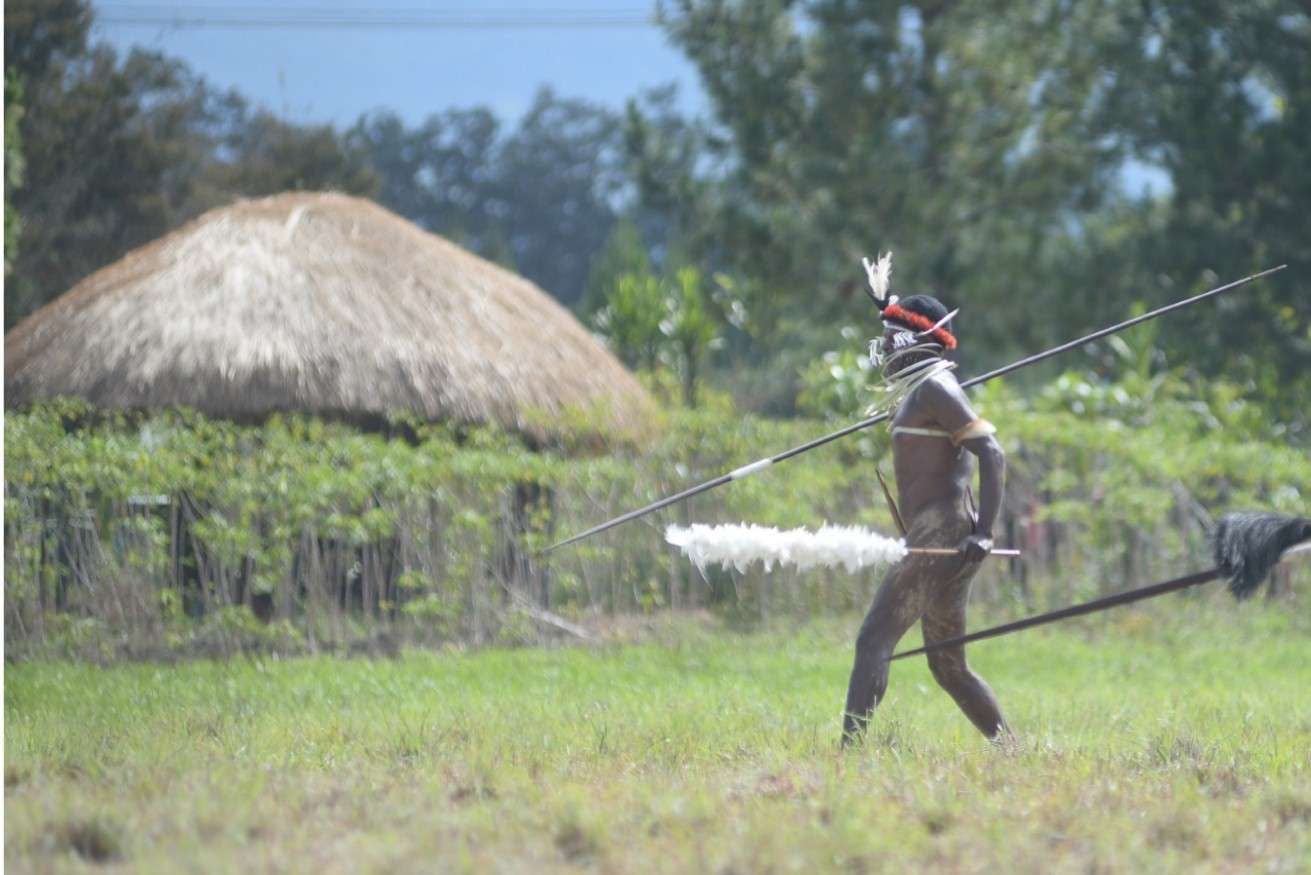
by Jhon Kwano
Introduction
The Koteka Tribal Assembly (Dewan Musyawarah Masyarakat Koteka — DeMMAK) is perhaps the most misunderstood alliance of tribes in the West Papua highlands. It has been variously branded as an extremist organization, a violent movement, and even a semi-military task force fighting against Indonesian occupation in West Papua. Yet these characterizations obscure its actual purpose. The background and primary objective of DeMMAK is to restore and revitalize customary norms, values, and systems across the highlands of New Guinea, and further, to modernize the social, cultural, and economic institutions of the Koteka Tribes — enabling proactive and meaningful participation by the Koteka peoples in modern development and modernization efforts.
Organizational Background
DeMMAK was founded around the year 2000, emerging during a period of significant political transition in Indonesia following the fall of Suharto’s New Order regime. The organization brought together major highland tribes including the Lani, Mee, Amungme, Komoro, Yali, Damal, and Moni, along with smaller sub-tribes such as Nggem and Walak, under a single cultural-political umbrella [1][2].
The organization’s leadership structure included activist figures such as Benny Wenda, who was elected as executive leader in 2000. Under his direction, DeMMAK campaigned for the protection of customs, values, and beliefs of the tribal people in the highlands [2]. The assembly functioned as both a defender of traditional culture and land rights and a coordinated voice for broader Melanesian heritage concerns.
Cultural Mission vs. Political Characterization
The core mandate of DeMMAK centers on three interrelated objectives:
- Cultural Preservation: Restoring and revitalizing customary norms (adat) that had been eroded by decades of outside influence and integration pressures.
- Community Modernization: Helping Koteka communities navigate modern systems while retaining cultural identity — particularly in education, economic participation, and civic engagement.
- Inter-Tribal Unity: Providing an umbrella structure for diverse highland tribes to coordinate on shared concerns affecting indigenous peoples in the region.
These aims contrast sharply with the security-focused labels applied to the organization. According to reporting on DeMMAK’s formation and activities, the organization was established primarily as a consultative council (“Koteka Community Consultative Council”) focused on bringing together tribes for mutual support and advocacy [6].
The Context of Misunderstanding
The characterization of DeMMAK as a security threat cannot be understood without acknowledging the broader political context in which it operates. Several factors contribute to this dynamic:
Security Operations and Access Restrictions: Human rights monitoring groups report that Indonesian security forces frequently operate in West Papua, with journalist and observer access restricted in the region [0]. This lack of independent verification means many claims about indigenous organizations remain contested.
Historical Precedent: Since Indonesia took control of West Papua in 1963, indigenous Papuan organizations have faced varying degrees of scrutiny depending on their political stance relative to Jakarta’s sovereignty claims [0][2]. Organizations advocating for indigenous rights in this context risk being conflated with separatist movements regardless of their stated mission.
Competing Sovereignty Claims: Indonesia asserts that West Papua is an inseparable part of the Republic and pursues its full administrative integration through the Special Autonomy framework. The central government has emphasized accelerating development and improving public services in the region, with President Prabowo Subianto directing regional heads to implement measures aimed at deepening integration and raising living standards [0][5]. Meanwhile, West Papuan independence supporters argue that indigenous communities require genuine self-determination to determine their own developmental path [7].
Allegations and Counter-Allegations
Information available suggests that DeMMAK has faced serious accusations, including involvement in violent incidents. Some sources indicate that Benny Wenda was arrested in June 2002 and charged with masterminding attacks on security installations [4]. However, these allegations exist alongside reports of human rights abuses allegedly committed by security forces against indigenous communities in the highlands.
According to human rights documentation, indigenous peoples in West Papua have reported systematic abuses including extrajudicial killings, torture, arbitrary arrest, and displacement linked to military operations and resource exploitation projects [0][1]. Some indigenous advocates have alleged that DeMMAK leaders face similar risks of detention and intimidation when advocating for customary land rights or protesting external development projects [7].
Development and Participation Goals
Contrary to the security-focused narrative, DeMMAK’s publicly stated goals emphasize constructive participation in development processes:
- Economic Integration: Enabling Koteka peoples to participate proactively in regional and national economic systems without losing cultural identity
- Education Access: Supporting community members’ entry into modern educational and professional pathways
- Policy Advocacy: Representing highland tribe interests in dialogues with government and development actors
This orientation aligns with international frameworks supporting indigenous peoples’ right to free, prior, and informed consent regarding development projects affecting their territories, as well as the right to maintain and strengthen distinct cultural practices [5].
Conclusion
Understanding DeMMAK requires moving beyond binary categorizations of “extremist” versus “moderate,” or “separatist” versus “integrationist.” The organization exists within a complex landscape of competing sovereignty claims, security narratives, and indigenous rights struggles. While allegations about DeMMAK’s activities persist, they coexist with substantial documentation of cultural preservation work and community development initiatives.
For external observers, policymakers, and researchers, the question becomes less whether DeMMAK fits pre-existing categories and more how indigenous organizational forms can be engaged constructively to advance both cultural continuity and human development outcomes. Recognizing DeMMAK’s stated mission — restoring customary systems while enabling modern participation — offers a framework for engagement that respects indigenous agency while acknowledging the legitimate complexities of governance in the West Papua highlands.
Notes on Sources Used
| Section | Primary Sources |
|---|---|
| Organizational Background | Koteka.org, New Naratif biography |
| Security Context | Survival International, International Crisis Group |
| Indonesian Government Position | Antara News, Setkab.gov.id |
| Human Rights Documentation | Yale Law School, IPWP |
Leave a Reply